Soundscape of Naples’ Neighborhoods
Naples is a city of layered sounds: voices, bells, car horns, laughter, market calls, engines. But what makes it truly fascinating is that each neighborhood has its own distinct soundscape — a unique, recognizable auditory environment that tells the story of daily life and local identity.
The concept of soundscape — the acoustic landscape of a place — is at the heart of several research projects in Naples, such as NapoliSoundscape, created at the Conservatory of San Pietro a Majella. This project captures and analyzes the city’s sonic environments — streets, piazzas, markets — to give them renewed cultural value.

Listening, neighborhood by neighborhood
-
Historic Center
In the alleys of the historic center — such as via dei Tribunali, vico Lungo Gelso, piazza San Gaetano — the dominant backdrop is made up of shouted street calls, buzzing scooters, vendor cries, and church bells mingling with the echo from artisan workshops. In the “Passeggiata sonora da via Maddaloni…” project, these sounds emerge as deeply rooted elements of place.Here, the soundmark — the signature sound of the area — might well be the constant murmur of the marketplace, providing a living soundtrack to the district.
-
Spanish Quarters and Pignasecca
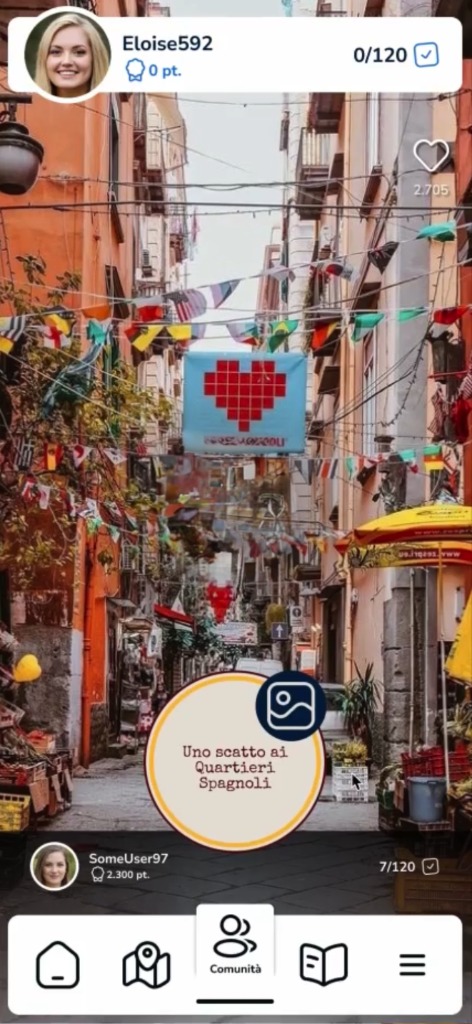
In this urban mosaic, the Pignasecca market is a sound stage all its own: cries like “Fortunato tene ‘a rrobba bella!”, the ever-present hum of the crowd, the rustle of plastic bags, and the sharp wail of sirens all create a unique ensemble.In the narrow streets of the Spanish Quarters, the keynotes (background sounds) are often the revving of scooters, while sound signals (foreground sounds) include kids playing or a woman suddenly calling from a balcony.
-
Vomero and Posillipo
Unlike the bustling center, the hillside neighborhoods of Vomero and Posillipo feature a quieter, more contemplative soundscape. Car horns are rare, funiculars hum in the distance, and the wind over terraces, the cries of seagulls, or a melody drifting from a bar overlooking the bay mark a slower rhythm.Here, the soundmark might be the clicking of high heels on the stones of via Scarlatti or the melodic call of an ice cream vendor at sunset.

Why listen to the neighborhoods?
• Urban identity: Each neighborhood has unique sounds — recognizing them helps you feel the city on a deeper level.
• Sensory tourism: Go beyond sightseeing to experience the living rhythm of the neighborhoods through their sounds.
• Sound heritage preservation: Projects like NapoliSoundscape stress that environmental sounds are intangible heritage worth recording and protecting.
• An alternative narrative: A neighborhood’s sound ID becomes a story — a gateway into discovering community culture, hidden alleys, and local life.
Listening to Naples offers a new perspective.
Because seeing is often predictable — but listening requires attention, and gives back the city in its truest form.