The neighborhoods that inspired unique cinematic visions
In Naples, each rione (neighborhood) is a world unto itself — not just a backdrop, but a living, speaking, complex character. That’s why any film that chooses to tell a Neapolitan story must engage with its neighborhoods: it lives in them, listens to them, and transforms them into vision. Certain rioni, in particular, have become powerful narrative locations, capable of conveying universal stories through their architecture, light, and faces.

Rione Sanità
The beating heart of the city. A labyrinth of alleyways, churches, courtyards, and crumbling noble palaces, Sanità has inspired powerful and conflicted films like The Mayor of Rione Sanità by Mario Martone, where classical tragedy meets brutal modernity.
Martone’s Nostalgia (2022) also explores it with an introspective lens, examining themes of roots, absence, and return.
Here, the blend of sacred and profane, archaeology and street life, offers cinema a unique human and symbolic landscape.
Forcella
Raw, real, theatrical. Forcella is a neighborhood that doesn’t disguise itself — it offers cinema an intense, vertical Naples.
Among run-down buildings and votive shrines, it often becomes the setting for stories of resilience and identity. It’s one of the symbolic locations of Gomorrah – The Series, and the perfect set for tales of solidarity and community.
Each shot in Forcella captures a gesture, a tone, a humanity that needs no script.
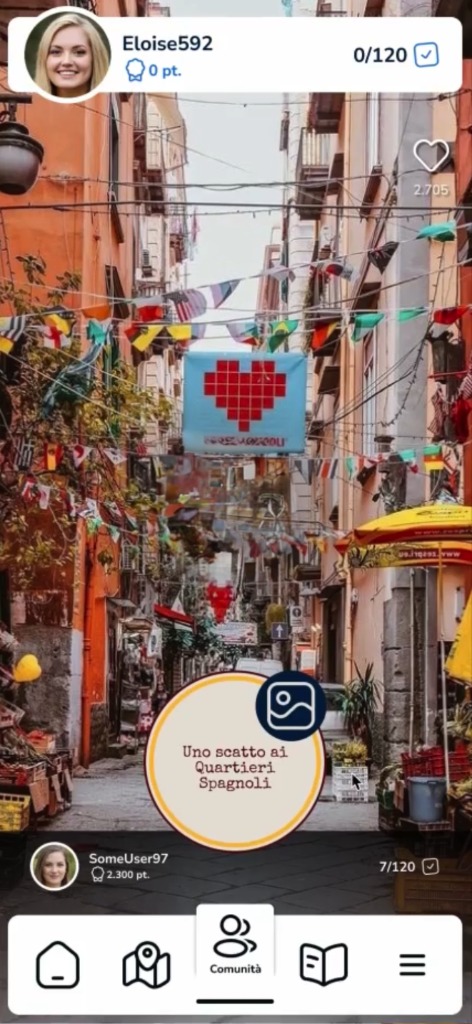
Quartieri Spagnoli
Once feared, now reclaimed through new imagery, the Spanish Quarters have become one of the most popular filming locations, featured in The Bastards of Pizzofalcone, Mare Fuori, and more.
Here, cinema finds urban energy, striking verticality, and strong contrasts — but also the tenderness of everyday life, the sound of a city moving along staircases and laundry lines.
Every view is a narrative opportunity; every balcony, a stage.
Posillipo
The other face of the city — elegant, panoramic, melancholic. Posillipo is the district of contemplative cinema, where beauty becomes introspection.
Director Paolo Sorrentino chose it for many scenes in his films, from One Man Up to The Hand of God.
Here, the sunset over the sea turns every conversation into poetry.
The dreaming city reflects in its waters, and cinema emerges transformed.
Not just settings: neighborhoods as dramaturgy
In Naples, the urban landscape plays an active narrative role. There’s no need to invent sets — the city is already a story.
Its rioni are more than places; they are architectures of meaning, story-generators.
This is where cinema finds the most authentic Naples: in its alleys, courtyards, and peeling palaces, still redolent of theatre, music, and survival.